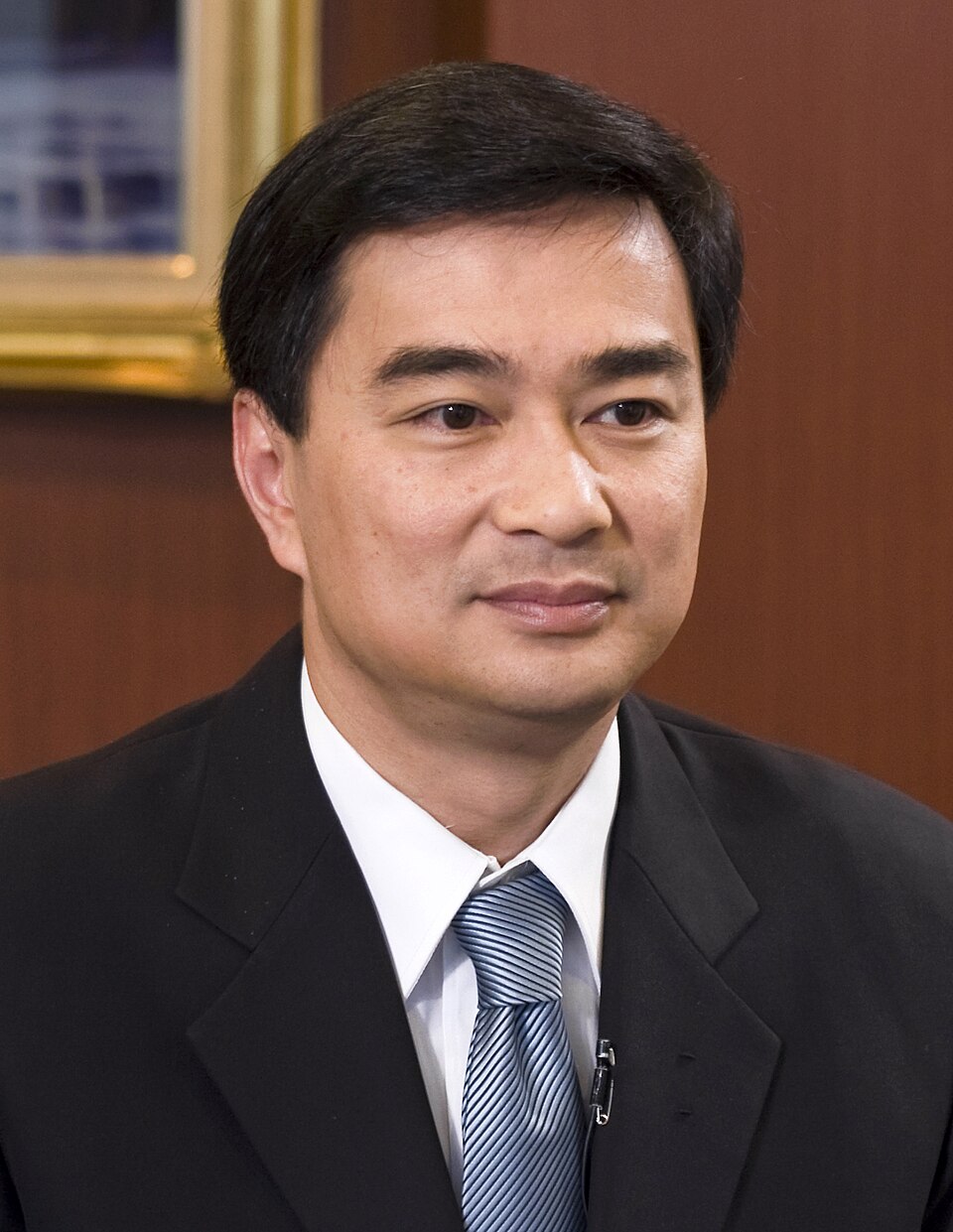
Former Thai PM Abhisit Vejjajiva: His $2 Million Net Worth Explained
Abhisit Vejjajiva stands as a prominent figure in modern Thai politics, recognized for his tenure as Prime Minister and a career marked by both distinguished service and significant controversy. Beyond his political achievements and challenges, one aspect that often draws public interest is the financial standing of public figures. For Abhisit Vejjajiva, his declared net worth of $2 million, specifically how it was accumulated without a private sector career, offers a unique insight into the financial landscapes of long-serving politicians. This article delves into the journey of the former Thai Premier, exploring his background, political ascent, the declared sources of his wealth, and the significant events that shaped his time in office. Understanding
Abhisit Vejjajiva's net worth 2024 provides a lens through which to examine his public life and the expectations placed upon those who lead a nation.
From Elite Education to the Heart of Thai Politics
Born in Newcastle upon Tyne, England, in August 1964, Abhisit Vejjajiva’s early life was marked by an exceptionally prestigious education. He attended Eton College, one of the world's most exclusive boarding schools, before matriculating at the University of Oxford. His time at Oxford, where he read Philosophy, Politics, and Economics (PPE), is a classic pathway for many aspiring politicians and global leaders. This foundational education, steeped in critical thinking and an understanding of governance, undoubtedly prepared him for the complex world of public service.
Upon returning to Thailand, Vejjajiva wasted no time in making his mark on the political scene. His rapid ascent was remarkable; at just 27 years old, he was elected to the Parliament of Thailand. This early entry into national politics, particularly for someone with his academic background, signaled a promising future. He became a stalwart member of the Democrat Party, representing the Bangkok Metropolitan Region – 6th District in the Thai House of Representatives from July 1992 until December 2013. His consistent presence in parliament for over two decades underscores his dedication to public service and his deep roots within the party.
His influence within the Democrat Party grew steadily, leading to his election as Leader of the party in March 2005. This position placed him at the forefront of Thai opposition politics, a role he held from March 2005 until December 2008. These years were crucial, allowing him to hone his leadership skills and build a platform that would eventually propel him to the nation's highest office.
The Premiership and Policy Vision
In December 2008, Abhisit Vejjajiva reached the pinnacle of his political career, becoming the 27th Prime Minister of Thailand. His premiership, which lasted until August 2011, was a period of intense political and economic challenge. As Prime Minister, Vejjajiva championed a "people's agenda," focusing on social welfare and economic stability. His government implemented two significant economic stimulus packages, aiming to bolster the Thai economy in the wake of global financial uncertainties.
However, his time in office was also characterized by widespread protests and significant unrest. His government faced major demonstrations in 2009 and 2010, primarily from the "Red Shirt" movement. These protests escalated into confrontations that led to military crackdowns and tragic casualties, with an estimated 90 people losing their lives. These events cast a long shadow over his premiership and ultimately led to his being formally charged with murder in connection with the 2010 crackdown, a charge he denied.
Even after his term as Prime Minister, Vejjajiva continued to play a significant role as Leader of the Opposition from August 2011 until his resignation from the leadership in December 2013, coinciding with the murder charges. His political journey illustrates the demanding and often tumultuous nature of leadership in a country frequently grappling with political instability.
Unpacking Abhisit Vejjajiva's $2 Million Net Worth
One of the most intriguing aspects of Abhisit Vejjajiva's public profile is his financial standing. When he was appointed Prime Minister in 2008, he declared personal assets worth 51.8 million baht, which at the time equated to approximately $2 million USD. This figure is frequently cited when discussing
Abhisit Vejjajiva net worth.
What makes this declaration particularly notable is the explicit statement that he "has never worked in the private sector" and acquired his wealth "through gifts or inheritance." This stands in contrast to many political figures who amass wealth through business ventures, investments, or high-paying corporate careers before or alongside their public service.
Let's delve deeper into what this means:
*
Family Background and Inheritance: Thailand, like many nations, has established political families where wealth is passed down through generations. For individuals from such backgrounds, an inheritance can form a substantial part of their personal assets. Given Vejjajiva's elite educational background and his family's standing, it's highly probable that inherited wealth plays a significant role in his financial portfolio. This is not uncommon for politicians who come from distinguished lineages and choose public service early in their careers.
*
Gifts: The term "gifts" can encompass a wide range of assets, from financial donations to properties or other valuables. In some cultures, gifts are an integral part of family and social structures. For public figures, transparency regarding gifts is paramount to avoid any perception of impropriety or undue influence. While the exact nature of these gifts is not publicly detailed, their mention as a source of wealth is a key component of his financial declaration.
*
Public Service Salaries: While politicians' salaries can be substantial, especially for long-serving Members of Parliament and Prime Ministers, it's generally understood that salaries alone, even over decades, are unlikely to accumulate to a multi-million dollar net worth without significant investment or additional sources. The fact that Vejjajiva never worked in the private sector reinforces the idea that his declared wealth stems from pre-existing or external family-related sources rather than personal entrepreneurial endeavors or high-paying corporate roles.
The transparency of declaring assets, especially for a head of government, is a critical component of accountability. It allows the public to scrutinize the financial dealings of their leaders and ensures that wealth acquisition aligns with ethical standards. For Vejjajiva, his public declaration highlights a distinct path to wealth that relies heavily on family legacy rather than commercial success. This aspect of his financial profile provides valuable context to his identity as a politician and his role in Thai society. Further insights into this dynamic can be found in discussions around
Abhisit Vejjajiva's $2M Net Worth: Gifts, Inheritance, and His Political Career.
A Legacy of Challenges and Contributions
Abhisit Vejjajiva's political career, while marked by his intellectual prowess and commitment to public service, was undeniably complex. He was a leader during a turbulent period in Thai history, grappling with deep societal divisions and economic pressures. His "people's agenda" aimed to address the needs of ordinary citizens, yet his administration faced unprecedented challenges that culminated in tragic loss of life and enduring political fallout.
His journey from an English-born, Oxford-educated academic to a Thai Prime Minister leading a deeply divided nation encapsulates the intricacies of modern global politics. While his declared
Abhisit Vejjajiva net worth of $2 million, sourced from gifts and inheritance, distinguishes him financially from many self-made politicians, it also points to a traditional path to power often associated with established families.
Ultimately, Abhisit Vejjajiva's story is one of a dedicated public servant who navigated the highest echelons of power, leaving a complex legacy that continues to be debated and analyzed in Thailand's ongoing political narrative. His financial transparency, particularly the explicit mention of wealth sources, adds another layer to the public's understanding of his life and career.